The Enigmatic Origins: A Game Without a Clear Birthplace
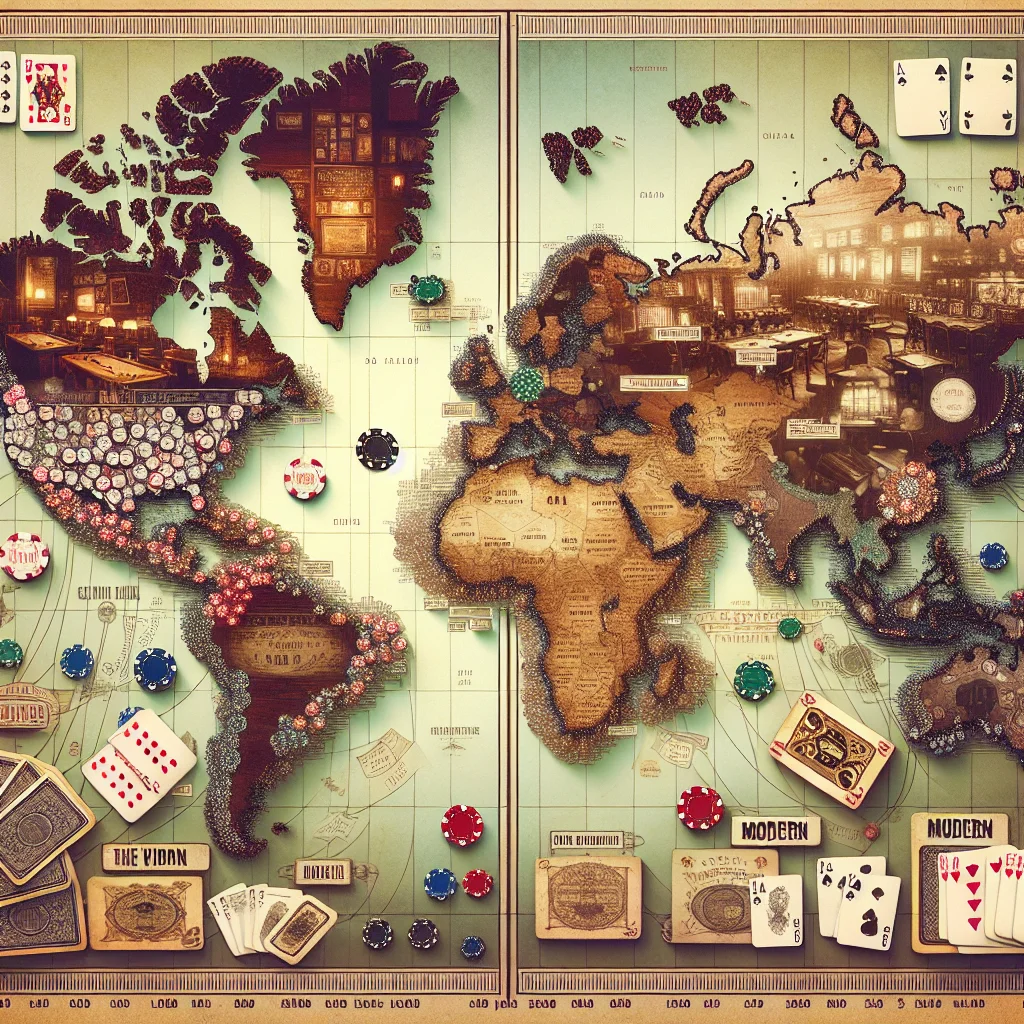
The history of poker is a tapestry woven with threads from many cultures, making its exact origin a subject of lively debate among historians. Most scholars agree that poker is a descendant of several older card games. The prime suspect is the Persian game ‘As Nas’, dating back to the 16th century, which featured a 25-card deck and hand rankings like pairs and three of a kind. This game likely traveled to Europe via trade routes. In France, it evolved into ‘Poque’, a bluffing game that used the terms “bluff” and “poque” itself. German settlers played a similar game called ‘Pochen’, meaning ‘to knock’ or ‘to brag’. When French colonists arrived in the New World, they brought Poque to the settlement of New Orleans. It was here, in the early 1800s, that the game began to morph into the poker we recognize, adopting the 52-card deck to allow more players and incorporating elements from the English game ‘Brag’. This melting pot of influences created a uniquely American pastime that was perfectly suited to the frontier spirit.
The American Crucible: Poker Shapes a Nation
Poker found its true home on the American frontier. It spread like wildfire up the Mississippi River on steamboats, becoming the favorite pastime of travelers, soldiers, and gamblers. These riverboats were floating casinos where fortunes were won and lost, cementing poker’s association with risk and reward. The game was integral to the lore of the Wild West, played in dusty saloons by legendary figures. It was during this era that the Draw Poker variant became dominant, and the concept of the ‘showdown’ was formalized. The American Civil War further popularized the game among soldiers from both sides, who took it back to their hometowns across the country. Key developments like the introduction of the jackpot (a precursor to the modern jackpot) and the standardization of hand rankings occurred in the late 19th century. By 1900, poker was a firmly entrenched part of American culture, though it was often played in the shadows of legality. Its portrayal in countless Western films and novels romanticized the image of the stoic, strategic poker player, an archetype that endures to this day.
Crossing the Atlantic: Poker’s European Evolution
While poker’s modern form was solidified in America, it made a triumphant return to Europe in the 20th century, adapting to local tastes. In the United Kingdom, poker had existed in private clubs for decades, but it saw a massive surge in popularity with the advent of televised tournaments. The UK developed a distinct poker culture, favoring cash games and a more reserved, mathematical style of play compared to the American flair. France, the land of Poque, embraced poker with a passion, particularly the variant ‘Texas Hold’em’. The Aviation Club de France in Paris became one of the most famous poker rooms in the world. Meanwhile, in Eastern Europe and Russia, poker took on a gritty, highly competitive character. The game became a symbol of intellectual combat in the post-Soviet era, with Russian pros now being some of the most feared competitors on the global circuit. Across the continent, legal frameworks varied wildly, from the regulated casinos of Monte Carlo to the more restrictive laws in Scandinavia, shaping how the game was played and perceived in each nation.
The Asian Phenomenon: A New Epicenter of Poker
The rise of poker in Asia is one of the most dramatic chapters in its history. While traditional games like Mahjong dominated, poker found a foothold in the Macau Special Administrative Region of China during the Portuguese administration. After the handover to China, Macau’s casino industry exploded, and by the 2000s, its poker rooms began rivaling those of Las Vegas in terms of high-stakes action. The true catalyst, however, was the ‘Moneymaker Effect’ in 2003, which resonated globally and inspired a generation of Asian players. Countries like Japan, South Korea, and the Philippines developed vibrant online and live poker scenes. The Philippines, in particular, became a hub for live tournaments and a destination for players from across Asia. In recent years, Vietnam and Cambodia have also seen rapid growth. The Asian style of play is often characterized by aggressive, unpredictable strategies, adding a new layer of complexity to the international game. Major tournament series now regularly stop in Manila, Macau, and Jeju, solidifying Asia’s status as a poker powerhouse.
The Digital Revolution: Online Poker Changes Everything
No development has impacted poker’s global spread more profoundly than the internet. The first real-money online hand was dealt in 1998, and by the early 2000s, platforms like PokerStars and PartyPoker were connecting players from Oslo to Osaka in real-time. Online poker demolished geographical barriers, allowing a teenager in Sweden to learn the game by playing thousands of hands against opponents from Brazil, Canada, and Australia. It created a boom in poker theory and analysis, with tracking software and solvers leading to a more scientific, data-driven approach to the game. The watershed moment was Chris Moneymaker’s 2003 World Series of Poker (WSOP) Main Event victory, which he qualified for through an online satellite tournament. This ‘everyman’ story triggered the ‘Poker Boom’, convincing millions that they too could achieve glory. Online poker also spurred the popularity of new formats, such as fast-fold poker and spin-and-go tournaments, catering to a generation with shorter attention spans. Despite regulatory crackdowns in some markets like the U.S. in 2011, the online ecosystem has continued to thrive and evolve globally.
Poker Today: A Truly Globalized Sport and Pastime
In the 21st century, poker has completed its transformation from a backroom American card game to a globalized mind sport. The World Series of Poker in Las Vegas remains the pinnacle, but its bracelet events are now contested by players from over 100 countries. The European Poker Tour (EPT), the Asia Pacific Poker Tour (APPT), and the Latin American Poker Tour (LAPT) have created a true world circuit. Television and streaming platforms like Twitch have turned top professionals into celebrities, while hole-card cameras have made the game a thrilling spectator sport. The game’s strategy is in constant flux, with influences from different regions blending together. The American tradition of storytelling and table talk meets the hyper-aggressive, mathematical styles honed online and in Europe. Furthermore, the game continues to evolve legally and socially. In many jurisdictions, poker is increasingly seen as a game of skill, leading to changes in gambling laws. From its mysterious Old World origins to its digital future, poker’s history is a story of adaptation, blending cultural influences into a universally compelling contest of psychology, probability, and nerve.
About the Author