Rivers, Rails, and Steamboats: The Infrastructure of Spread
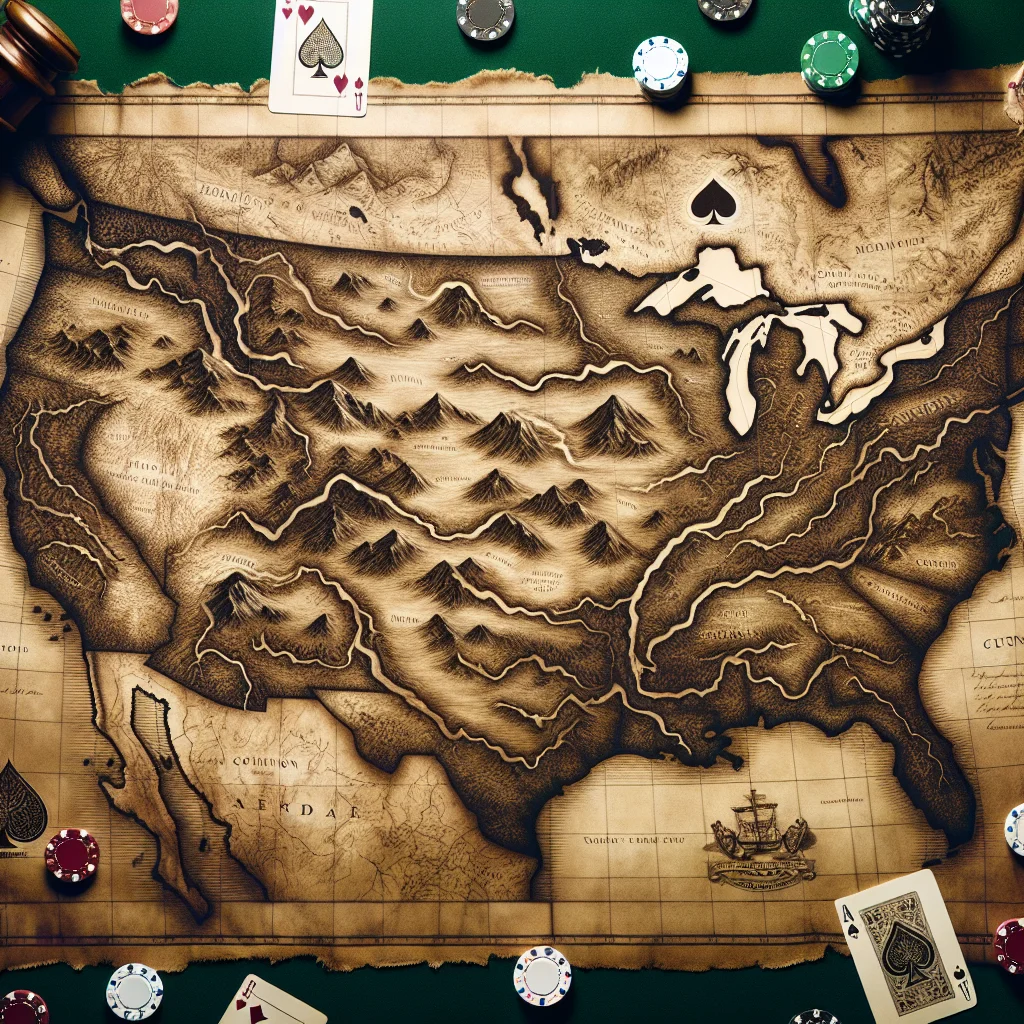
Poker’s initial diaspora was not a matter of mere cultural diffusion; it was physically propelled by the transportation networks of the 19th century. The Mississippi River system functioned as the game’s first and most important superhighway. From its seedbed in New Orleans, poker traveled north on paddlewheel steamboats, which were floating microcosms of society where merchants, soldiers, gamblers, and pioneers mingled for days or weeks. These vessels were the perfect incubator, providing captive audiences and a steady stream of new opponents. The game then jumped onto the expanding railroad networks, riding the iron rails to the frontier towns of the American West. This pattern repeated globally. In Europe, the game moved along canal systems and later railways, connecting port cities with inland capitals. In Asia, British steamship lines carried the game from Indian ports to Singapore, Hong Kong, and Shanghai. The very nature of these journeys—long, monotonous, and filled with strangers—made card games the ideal pastime, ensuring poker was literally dealt at every major crossroads of commerce and empire, embedding itself in the social fabric of mobile populations.
Legal Landscapes: From Outlawed Vice to Regulated Sport
The legal status of poker has been the single greatest external force shaping its development in each nation, creating a stark global patchwork. In the United States, its history is a rollercoaster of local bans, Wild West lawlessness, and the modern era of regulated casino gaming and the controversial UIGEA of 2006. This environment of conflict bred a resilient, adaptable poker culture. Conversely, in the United Kingdom, the 1960 Gaming Act established licensed gaming clubs, creating a stable, if exclusive, environment for poker’s growth as a serious pursuit. France’s legalization of poker in 2010 under a regulated online model sparked an immediate and massive boom. Meanwhile, in many Asian countries, ambiguous laws created a grey market; places like Macau and the Philippines leveraged special administrative or economic zone status to become meccas, while in mainland China, poker exists in a nebulous space, often played as a “competition” for points. In Scandinavia, state-run gambling monopolies like Sweden’s Svenska Spel controlled the market, fostering a specific, locally-regulated style of play. Each legal framework acted as a selective pressure, determining whether poker flourished openly, survived underground, or evolved into a unique, jurisdiction-specific form.
Isolation and Innovation: The Birth of Regional Variants
Geographic and political isolation served as unexpected crucibles for poker innovation, leading to the development of distinctive regional variants that reflected local character. Before Hold’em’s global dominance, many areas had their own homegrown games. In the American South, “Stud Poker” variants reigned supreme, their sequential betting rounds and mix of hidden and visible cards suiting a more patient, observational style. In the mountain states and parts of the Midwest, “Draw Poker” remained king, a pure test of bluffing and hand-reading with no community information. Across the Atlantic, the UK and Ireland had a deep affinity for “Five Card Draw” and “Pot Limit” betting structures, games that required nuanced judgment of relative hand strength. In parts of Eastern Europe, games involving multiple lowball hands or unique wild card rules emerged from private home games. These localized variants were more than just different rules; they trained generations of players in specific strategic skills—draw honed bluffing expertise, stud cultivated memory and odds calculation—that, when those players later encountered Texas Hold’em, informed a uniquely regional approach to the global game, enriching the overall strategic tapestry.
Climate and Culture: The Social Ecology of the Game
The very feel and social role of poker were molded by climate and cultural rhythms. In the warm, outdoor-oriented cultures of the Mediterranean and Latin America, poker was often an open, social, late-night affair, played on terraces or in bustling cafes, integrating seamlessly into a lifestyle of public sociability. The game was loud, expressive, and part of the community’s soundscape. In contrast, in the colder climates of Northern Europe, Russia, and the northern United States, poker was an indoor, hearth-focused activity. It became a more intimate, intense, and intellectually-focused winter pastime, perfect for long nights. This fostered a culture of deep analysis, theory discussion, and a quieter, more stoic table demeanor. In monsoon-prone regions of Asia, indoor gaming halls became natural havens. Furthermore, agricultural cycles influenced play; poker games in farming communities would ebb and flow with planting and harvest seasons, while in industrial or trading cities, the game provided a consistent nightly escape. The game adapted to the tempo of local life, becoming a leisurely weekend marathon in some cultures and a fast-paced weekday diversion in others, directly impacting the development of game formats and playing speeds.
The Digital Geography: Servers, Skins, and Global Pools
The online revolution introduced a new, virtual geography that overlaid and often overrode physical boundaries. Poker sites created “network skins” and server locations that defined new, digital regions. A player in Norway might be playing on the “Italian” skin of a network, competing against a player in Argentina on the “Spanish” skin, with both connected to servers in Gibraltar. This created “liquidity pools”—specific player ecosystems with their own meta-games. The .com (international) pool was known for a tough, aggressive style, while certain European-regulated ring-fenced pools developed softer, more predictable dynamics. Digital geography also led to “server migrations,” where changes in law, like the U.S. Black Friday, would instantly redraw the global player map, causing a mass exodus from one network and a boom on others. Time zones became a new strategic factor, as player tendencies changed dramatically between the afternoon “recreational” crowd in one hemisphere and the late-night “grinder” population in another. This borderless, yet strangely partitioned, digital world allowed for the rapid cross-pollination of strategies while simultaneously creating isolated pockets where unique playing cultures could briefly form and evolve.
The Future Map: Regulation, Tourism, and the Next Frontiers
The future global map of poker is being drawn today by evolving regulations, economic trends, and tourism. The ongoing wave of online poker regulation in Europe and the Americas is creating a stable, taxable, and consumer-protected industry in some nations, while others remain unregulated markets. This legal clarity attracts investment, major tournament series, and infrastructure, solidifying those countries as permanent hubs. Conversely, the rise of “poker tourism” directs the physical flow of players. Destinations like Las Vegas, Rozvadov (Czech Republic), and Metro Manila are not just cities with casinos; they are purpose-built pilgrimage sites for poker players, their economies intertwined with the game. The next frontiers are already emerging. Africa, with a growing middle class and increasing internet penetration, represents a vast potential market. India, with its billion-plus population and historical love of cards, is a sleeping giant. As laws change and connectivity spreads, these new regions will not merely adopt the global Hold’em standard; they will inevitably imprint their own cultural logic, strategic history, and social customs onto the game, writing the next chapter in poker’s endless geographical adaptation and ensuring its landscape remains perpetually in flux.
About the Author