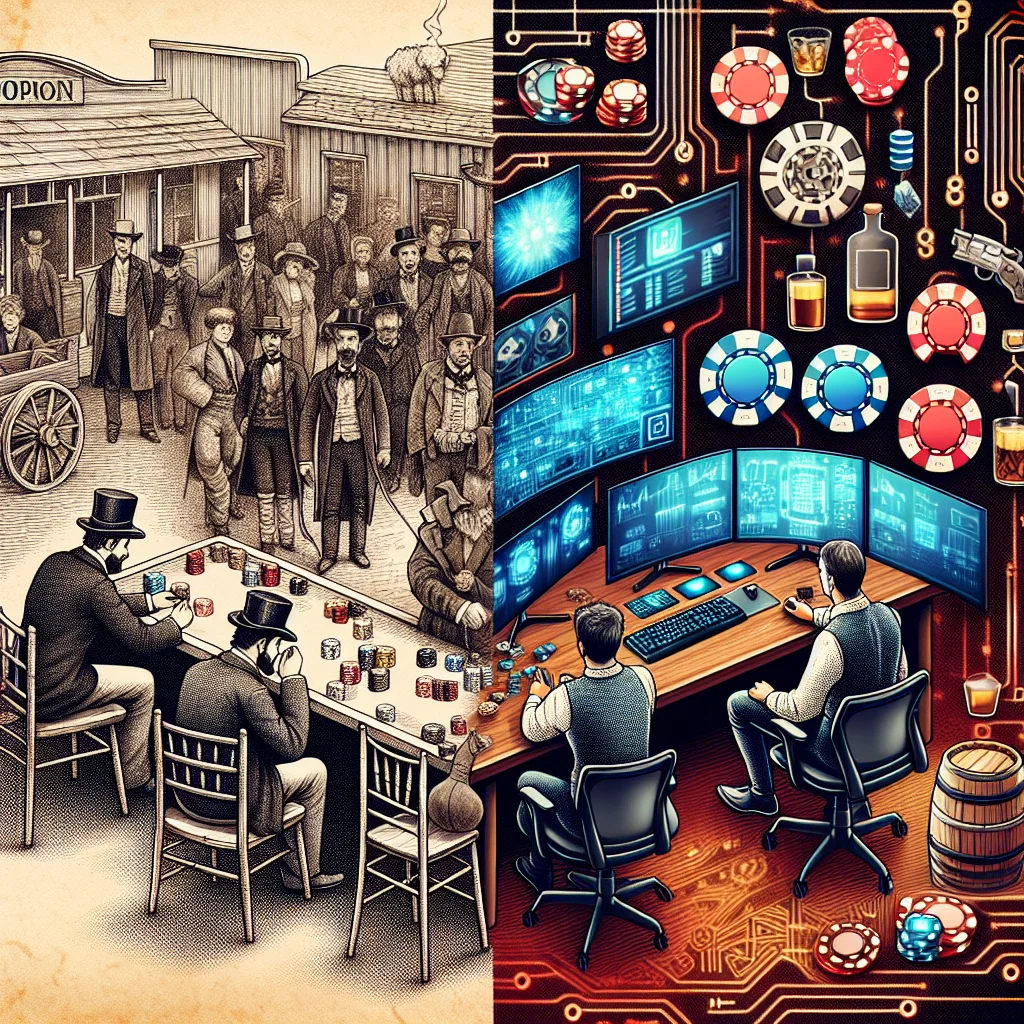
The Physical Foundations: Chips, Cards, and the Standardized Deck
Before poker could conquer the world, it needed reliable, standardized equipment. The earliest games used whatever was at hand: gold nuggets, coins, or even IOUs scribbled on paper. The introduction of dedicated gambling chips in the late 19th century was a quiet revolution. Clay composite chips, with their weight, sound, and stackability, professionalized the game. They enabled larger, more secure pots and faster betting rounds. Equally crucial was the standardization of the 52-card Anglo-American deck with durable, coated paper. The French design (hearts, diamonds, clubs, spades) became the global norm, allowing a player from New Orleans to sit down with a deck in London or Hong Kong and instantly understand the tools. The development of automatic card shufflers in the 20th century increased game speed and reduced dealer fatigue, while the introduction of the “cut card” and professional dealing procedures minimized cheating. These physical technologies created a consistent, trustworthy user experience. They turned poker from a chaotic, potentially fraudulent backroom activity into a structured game that could be reliably hosted in casinos and clubs worldwide, providing the stable physical platform necessary for broader cultural acceptance and competitive integrity.
The Broadcast Breakthrough: Hole-Card Cameras and the Poker Boom
For decades, poker was a terrible spectator sport. Viewers saw only the backs of cards and the faces of players, missing the entire narrative. This changed in the late 1990s with the invention and refinement of the hole-card camera. This simple technology—a tiny camera revealing each player’s hidden cards to the television audience—unlocked poker’s dramatic potential. Suddenly, viewers were in on the secret. They could sweat a bluff, appreciate a brave call, and understand the genius of a fold. The British show “Late Night Poker” pioneered this format, but it was ESPN’s coverage of the 2002 and 2003 World Series of Poker Main Event that ignited the global “Poker Boom.” Audiences watched Chris Moneymaker, an amateur who qualified online, outplay the pros. The hole-card camera turned poker into a narrative of psychological warfare, making stars of players like Phil Hellmuth and Daniel Negreanu. It demystified high-level play, teaching millions the fundamentals. This broadcast technology didn’t just show the game; it marketed it, creating an irresistible allure that drew a new generation into card rooms and online poker sites, transforming poker from a niche hobby into prime-time entertainment.
The Digital Dawn: The Rise of Online Poker Platforms
The most transformative technological leap was the creation of secure online poker platforms in the late 1990s. The launch of Planet Poker in 1998, followed by Paradise Poker and the industry-defining PokerStars, created a virtual, borderless casino that never closed. This technology solved poker’s fundamental constraints of geography and scarcity. A player in a small town with no card room could now access thousands of games daily. The software handled all logistics: shuffling, dealing, chip counting, and payout calculations with cryptographic security. It introduced features like multi-tabling (playing multiple games simultaneously), instant hand histories, and anonymous play. Online platforms also became vast laboratories for data. Every hand played contributed to a massive database, allowing for post-game analysis on an unprecedented scale. This birthed a new, analytical approach to the game. The “grinder”—a player who treated poker as a data-driven, volume-based profession—was a creation of this technology. Online poker didn’t just spread the game; it accelerated its strategic evolution by orders of magnitude, compressing decades of live experience into years of digital play and creating a new, globally interconnected poker economy.
The Software Arms Race: HUDs, Solvers, and Data Analytics
As online poker grew, a secondary industry of analytical software emerged, fundamentally altering how the game is studied and played. The Heads-Up Display (HUD) was the first major tool. Programs like PokerTracker and Hold’em Manager would overlay real-time statistics (VPIP, PFR, aggression frequency) on the online table, turning opponents from anonymous icons into spreadsheets of exploitable tendencies. This turned poker into a game of data mining and population analysis. The next leap was the development of Game Theory Optimal (GTO) solvers, such as PioSOLVER and GTO+. These powerful programs could compute mathematically unexploitable strategies for specific poker situations, given enough computing power. Players could now input a hand scenario and receive a solution detailing the optimal frequency for betting, calling, or folding with every possible hand. This technology moved theory from general principles to precise, situation-specific prescriptions. It created a new language of “ranges,” “nodes,” and “frequencies.” While initially the domain of elite players, solver-driven theory has trickled down to all levels, raising the global strategic baseline and making the games tougher. This software arms race has made modern poker a hybrid discipline, part psychology, part probability, and part computer science.
The Streaming and Social Media Era: Twitch, YouTube, and Community
The 2010s ushered in the social technology era, with live streaming platforms like Twitch and content hubs like YouTube further democratizing poker knowledge and culture. For the first time, fans could watch top professionals like Jason Somerville, Jaime Staples, or Lex Veldhuis play high-stakes games in real-time, listening to their unfiltered thought processes. This created an intimate, interactive learning experience far beyond static books or pre-edited TV shows. Streamers built communities, fostering a new, more accessible poker culture. YouTube became a vast library of free strategy content, hand breakdowns, and vlogs, breaking down the barriers to advanced knowledge. Simultaneously, social media (Twitter, Instagram) allowed pros to build personal brands and engage directly with fans, making the poker world feel smaller and more connected. This ecosystem also created new career paths: the poker streamer and the content creator. These technologies shifted poker’s image from the aloof, sunglasses-wearing pro to the relatable, communicative personality, making the game more welcoming and accelerating skill dissemination across continents, as a player in Brazil could learn in real-time from a streamer in Canada.
The Future Tech Horizon: VR, Blockchain, and AI Coaches
The technological transformation of poker continues at the frontier. Virtual Reality (VR) platforms promise to merge the social and physical aspects of live poker with the convenience of online play, allowing players to sit at a virtual table, read body language in avatar form, and handle chips in a 3D space. Blockchain technology and cryptocurrencies are already facilitating faster, more anonymous deposits and withdrawals on some sites, and could enable truly decentralized, player-owned poker platforms. The most profound future impact may come from advanced Artificial Intelligence. While AIs like Libratus and Pluribus have already surpassed humans in certain forms of poker, their next role will be as hyper-personalized coaches. Imagine an AI that analyzes your entire hand history, identifies your strategic leaks, and runs simulations on your specific mistakes. Furthermore, RNG (Random Number Generator) verification through blockchain could provide unprecedented levels of fairness and trust. These emerging technologies will further globalize the game, break down remaining financial and trust barriers, and push the strategic envelope into realms humans haven’t yet conceived, ensuring that the relationship between poker and technology remains the driving force of its ongoing evolution.
About the Author